

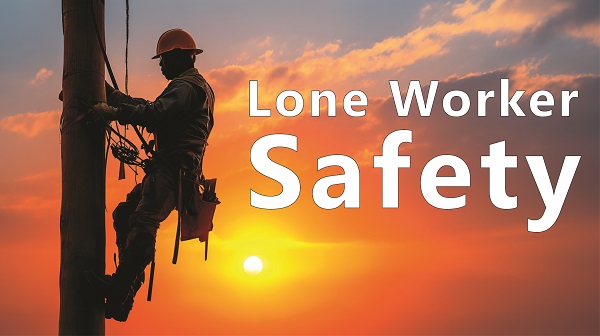
Imagine the last employee closing a quiet corner store after midnight, a utility worker repairing storm damage miles from the nearest home, or a farmhand alone in a Texas field on a hot day. These are real situations many of America’s lone workers face every day. Working alone brings independence and trust, but it also means that hidden risks — like a fall, a gas leak, or heat stroke — can quickly turn into emergencies if safety steps aren’t in place.
Lone workers operate in isolation, often in remote areas or confined spaces, where standard safety practices may not be enough. When something goes wrong, there is no one nearby to help. Industry experts and lone workers agree: technology helps, but human connection and strong safety habits matter as much as gadgets.
The following five tips can help ensure lone worker safety:
1 Check-in regularly.
Don’t leave safety to chance. Schedule phone or app check-ins, set report times, or use automated systems so someone always knows the worker’s location and condition. Even a quick text can make sure emergencies don’t go unnoticed.
2 Harness connected safety technology.
Injuries, toxic gases, or other sudden medical events often can’t wait for help to arrive. Wearable devices such as global positioning system (GPS) trackers, real-time gas detectors, man-down sensors, and personal panic buttons help workers alert managers the moment danger strikes. New systems can instantly broadcast alarms, location, and status, even when cell coverage is weak. The National Safety Council and DWC’s Wearable Safety Technology Fact Sheet provide more information about lone worker safety devices.
3 Prepare for workplace violence.
Lone workers in retail, delivery, or home health face higher risks of violence and unexpected threats. Employers can:
- Install protective barriers and bright lighting in stores.
- Provide personal alarms or hidden call-for-help devices.
- Empower staff to refuse unsafe situations.
4 Train, practice, and repeat.
Practice saves lives. Give workers hands-on training with safety tools and emergency plans. Run drills for gas leaks, falls, medical emergencies, or acts of violence, so the right response becomes automatic.
5 Fight isolation with support.
Working alone shouldn’t mean feeling alone. Regular check-ins, team calls, or onsite visits build a culture of connection and support. Encourage lone workers to share concerns with managers, and provide resources for health, safety, and stress management.
Safety is more than rules. It’s a culture where every worker feels seen, valued, and never truly alone. For more lone worker safety resources, download these free DWC publications:
- Lone Worker Safety Fact Sheet (English).
- Delivery Driver Safety Fact Sheet (English/Spanish).
- Taxi, Ride-Hailing, and Chauffeur Drivers Safety Fact Sheet (English/Spanish).
You can also schedule customized job training or request a free, on-site occupational safety and health consultation by contacting SafetyTraining@tdi.texas.gov or 512-804-4610.