

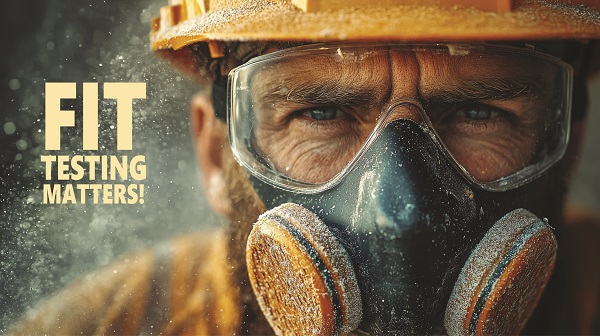
Breathing safely at work takes more than just wearing a respirator — it means making sure it fits your face the right way. A poor fit lets harmful dust, fumes, or vapors leak inside, lowering your protection. The Occupational Safety and Health Administration (OSHA) requires employees who wear tight-fitting respirators to complete a fit test before first use and at least once a year.
Follow these steps to make sure your respirator fit test keeps you protected on the job:
1 Get a fit test before wearing a respirator.
Complete a fit test before using a respirator for the first time and repeat every 12 months. Qualified staff or outside providers can perform the test to confirm that your respirator’s model and size seal tightly to your face. Without a good seal, airborne hazards can leak in and increase your risk.2 Choose the right type of fit test.
Each test helps confirm that your respirator fits and protects you fully:
- A qualitative test uses taste or smell to find leaks.
- A quantitative test uses special equipment to measure the amount of leakage into the facepiece.
- A Modified Condensation Nuclei Counter (CNC) test uses a CNC (often with a PorterCount® device) to measure the fit.
3 Retest when things change.
Schedule another fit test if your weight changes, you have dental work, or you undergo facial surgery. Any change that affects the shape of your face can affect the respirator’s seal.
4 Perform a seal check before each use.
Before each use, cover the respirator and breathe in or out gently. If you feel air escaping, adjust the straps or mask until the seal feels tight. A quick seal check each day keeps you protected between annual tests.
5 Stop and recheck your mask when something feels off.
If the respirator feels loose, slips while you talk, or the straps stretch, stop and fix the fit right away. Even a small gap can let harmful particles in. Replace worn parts and tell your supervisor about any problems.
6 Keep facial hair away from the seal.
Shave areas where the respirator seals to your face. Beards and stubble block the seal and allow leaks. OSHA rules require clean-shaven skin where the mask meets your face to maintain full protection.
7 Follow your employer’s respiratory protection program.
Review your workplace’s written program for respirator use, cleaning, and storage. Follow each step to stay compliant and safe.
8 Keep records current.
Track your fit test dates and results. Know when your next test is due, and make sure your records stay current so you’re always inspection-ready.
9 Ask questions and continue training.
Ask questions about how to wear, adjust, or maintain your respirator. Regular training builds confidence, prevents mistakes, and keeps everyone compliant with OSHA standards.
Need help?
Contact an Occupational Safety and Health Administration Consultant (OSHCON) or safety training instructor for more information about respirator safety, OSHA compliance, or customized workplace training: SafetyTraining@tdi.texas.gov or www.safetyatwork.com.
You can also download our free publication, Respirator Fit Testing – Take 5 for Safety, perfect for safety meeting reminders.