

Trenching and excavation work poses extreme dangers to workers. Soil types, weather conditions, and many other factors -- including unforeseen weak spots from faults or ruptured water lines -- can affect a trench's stability. This can lead to a sudden and unexpected trench collapse. When a cave-in occurs, workers have little time to escape. A single cubic yard of soil coming down on a worker weighs up to 3,000 pounds – as much as a car. It can quickly bury a worker alive or cause severe crushing or suffocation injuries. Recognizing these hazards, the Occupational Safety and Health Administration (OSHA) established strict requirements for companies engaged in trenching work. To protect workers, companies must understand and follow these important safety tips:
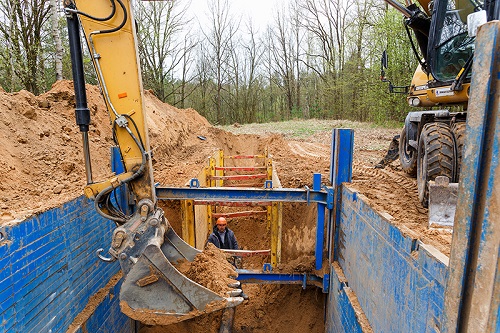
1 Use a trench protective system.
According to OSHA, a protective system is a method that protects workers from cave-ins, falling materials, and collapsing structures. OSHA requires a protective system for trenches that are deeper than 5 feet unless the excavation is entirely in stable rock. The basic types of trench protective systems are:
- Sloping: Cutting the sides of the trench at an angle that slants away from the trench.
- Benching: Excavating the sides of the trench to create one or more steps.
- Shoring: Installing supports to prevent soil movement and cave-ins.
- Shielding: Using trench boxes or other types of support to protect workers from a trench collapse.
2 Use a competent person.
A competent person is trained to select the best protective system based on the soil type, water content, and weather. This person must also inspect all trenches, regardless of depth, at the start of each shift and after any event, such as a rainstorm, that could increase the risk of a cave-in. This person must also:
- Oversee the installation of the protective system.
- Inspect the protective system daily for signs of damage or other hazards.
- Have the authority to stop unsafe work immediately.
3 Understand soil and stability.
Some soils are more stable than others. Always observe the soil as it is excavated. Look for fissures, water seepage, or other factors that may indicate the soil is becoming unstable. If soil conditions change, stop work immediately, exit the trench, and have the competent person re-inspect the excavation. OSHA classifies soils into four categories for trenching and excavation safety:
- Stable Rock: Natural solid mineral matter that can be excavated with a vertical side and remain intact while exposed.
- Type A: The most stable type of soil. Clay is an example.
- Type B: Soil that is less stable than Type A. Crushed rock, silt, and soils with an equal mixture of sand and silt are examples.
- Type C: The least stable soils. Gravel and sand are examples.
4 Have a way to get in and out.
A trench that has a depth of 4 feet or more must have a way to enter or exit within 25 feet of the employee. This might be a stairway, ladder, or ramp to help an employee quickly climb out of the trench if the soil begins to collapse.
5 Keep materials and mobile equipment away from the edge.
Excavated soil, called spoils, piled too close to the edge of a trench can cause a cave-in. So can heavy equipment. Keep spoils and equipment at least 2 feet from the edge. When possible, use vertical shores or shields that extend above the top of the trench to restrain the spoils.
6 Test for low levels of oxygen or hazardous atmospheres.
Hazardous atmospheres can occur in excavations near landfills, with leaking gas lines or storage tanks, in sewers, and other confined spaces. A competent person must test for hazardous gases and lack of oxygen before any worker enters the trench. Regular testing should continue throughout the work.
7 Follow OSHA requirements.
Complying with OSHA trenching standards (29 CFR 1926.650, Subpart P) is mandatory. While employers may think shoring or installing trench boxes is too expensive or time-consuming, keep in mind that fines for violations can exceed $100,000. That is in addition to increased medical and workers’ compensation costs, legal expenses, lost productivity, and possible criminal charges in the case of loss of life.
By following these guidelines, employers and workers can reduce the risk of trench-related accidents and ensure a safer work environment.
For more information, download or stream any of DWC’s free excavation and trenching safety publications or videos. Or contact one of DWC’s Occupational Safety and Health Consultation (OSHCON) Program professionals to receive free, confidential help to identify and eliminate workplace hazards: 800-252-7031, option 2, or OSHCON@tdi.texas.gov.