

3D printing is like a digital sculptor. It builds objects layer by layer from a computer file. It takes a 3D model and creates a physical copy, like a traditional printer, but in three dimensions. This process, also known as additive manufacturing, builds objects by adding material instead of cutting it away like traditional sculpting.
In construction, giant 3D printers can create walls, houses, bridges, and more by stacking thin layers of material—such as concrete, plastic, or metal—on top of each other, following a digital design. This technology speeds up building, lowers costs, and allows for creative designs. But like any construction tool, 3D printing comes with safety risks, such as:
- Exposure to metal powders, fires, explosions, and strong lasers.
- Inhaling tiny, harmful particles and chemicals (like styrene, toluene, methyl methacrylate, and aldehydes).
- Spills of plastic and ceramic that pollute the work area.
- Injuries from getting caught in or struck by large machines.
Stay safe with these tips:
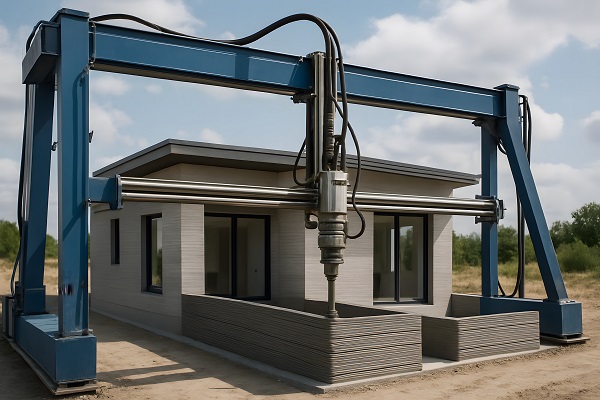
1 Train workers before use.
Only allow trained and authorized workers to operate or work near 3D printers. Training should include how the equipment works, possible hazards, and how to stay safe.
2 Wear proper protective gear.
Always wear the right safety equipment: hard hats, gloves, safety glasses, and respirators if needed. Handle powders and chemicals carefully—store them properly, clean up spills quickly, and use protective clothing and gloves.
3 Control dust, fumes, and emissions.
Vent exhaust away from the work area. Choose safer, lower-emission materials when possible. When printing indoors, add proper ventilation, enclosures, and filters (like HEPA) to trap dust and fumes.
4 Prevent fires and electrical hazards.
Keep flammable materials away from printers. Don’t use flammable sprays near machines. Have fire extinguishers nearby. Make sure all electrical systems are up to code, and regularly check printers to prevent sparks, overheating, or malfunctions.
5 Stay alert around machines.
Keep hands, tools, and loose clothing away from moving parts. If you see smoke, smell something strange, or notice a jam, report it right away and follow emergency procedures.
6 Follow building codes and safety rules.
Make sure all 3D-printed structures meet local building and fire codes. Use approved materials and work with inspectors to ensure your project is safe and legal.
For more information on 3D printing safety, review resources from the National Institute for Occupational Safety and Health (NIOSH), the American National Standards Institute (ANSI), and Texas Department of Insurance, Division of Workers’ Compensation (DWC).
For help with workplace safety training or free, on-site safety consultations, contact DWC at safetytraining@tdi.texas.gov or 800-252-7031, option 2.