

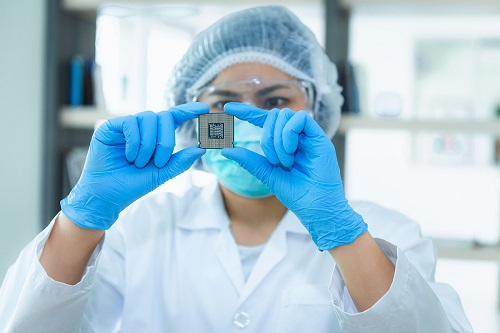
Texas is at the forefront of the semiconductor industry, with 15 existing or announced fabrication plants and component manufacturing facilities. This growth is expected to bring an estimated $61 billion in investment and 8,000 jobs to the Lone Star State, reports CNBC.
Semiconductors are vital for modern electronics, powering devices from smartphones to medical equipment. However, working with semiconductors can pose safety risks if proper procedures are not followed.
Hazards in the industry include exposure to chemicals, toxic metals, and radiation, among others. To maintain a safe and productive work environment use these tips:
1 Install proper ventilation systems.
Ensure good ventilation to reduce inhalation risks from solvents, acids, and caustic solutions. Use fume hoods or exhaust systems to remove airborne metal particles and gases like arsenic.
2 Require personal protective equipment (PPE).
Provide and ensure that all workers wear PPE, such as gloves, goggles, and aprons, to protect skin and eyes against chemical exposure and other hazards.
3 Label, handle, and store chemicals safely.
Properly label, handle, and store all chemicals, especially flammable and reactive ones. Update safety protocols regularly to include new chemicals and processes. Use automated systems, when possible, to minimize manual handling of hazardous material.
4 Monitor air quality.
Regularly check the air quality in the facility to detect harmful substances. Maintain gas detection systems to ensure they are functioning properly.
5 Use guards and shields.
Implement barriers and shields to protect workers from radiation and moving machine parts.
6 Perform regular equipment maintenance.
Conduct routine inspections and maintenance to avoid equipment failure and prevent accidents. Use lockout/tagout procedures to avoid accidental machine start-up during maintenance.
7 Provide thorough training.
Ensure all employees receive comprehensive safety training on hazardous materials, machinery operations, and emergency protocols. Include specialized training for handling silicon, gallium arsenide, and radiation safety.
Semiconductor hazards are addressed in specific OSHA standards for general industry in 29 Code of Federal Regulations 1910. For free, confidential assistance to ensure your facility is OSHA-compliant, contact an Occupational Safety and Health Consultation (OSHCON) Program professional at OSHCON@tdi.texas.gov or 800-252-7031, option 2.