

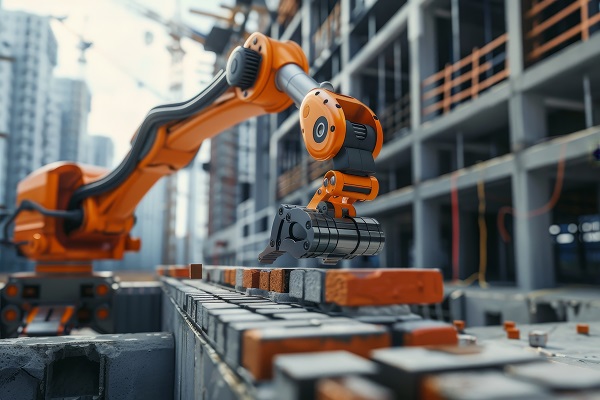
Walk onto a modern construction site, and alongside the familiar hard hats and heavy equipment, you might spot something new: robots. From remote-controlled demolition machines to robotic arms that lay bricks or tie rebar, these high-tech helpers are taking on the toughest tasks. More than tools, they’re becoming frontline partners in keeping workers safe.
Every year, thousands of construction workers are injured by lifting heavy materials, working at heights, or operating equipment in risky situations. Robotics helps by taking on the most dangerous, repetitive, and physically demanding jobs, keeping people out of harm’s way. But like any new technology, robotics brings unique challenges, requiring careful planning, new safety rules, and specialized training.
Here are some ways robotics is making construction sites safer:
1 Robots help keep workers safe by doing the most dangerous jobs.
Specialized robots can now handle hazardous tasks such as demolition, cutting, or welding. These machines can run by remote control, so workers don’t need to stand in harm’s way. For example, a remote-controlled demolition robot can safely tear down concrete walls — protecting workers from dust, debris, and falling objects.
2 Driverless machines make risky sites safer.
Some heavy equipment, like bulldozers and excavators, are now “autonomous,” meaning they can follow detailed digital instructions and move around the jobsite, much like a driverless car. These machines come with GPS, sensors, and cameras allowing them to work around the jobsite with minimal human help. Sometimes, workers supervise them remotely, but the machine does the heavy lifting.
3 Robotic arms and 3D printers take over hard and repetitive work.
Programmable robotic arms can lay bricks, tie rebar, weld, or 3D print building components. They work with precision and don’t get tired, helping to prevent worker injuries caused by repetitive motions or lifting heavy loads.
4 Drones and sensors help keep track of safety on the jobsite.
Drones give supervisors a bird’s-eye view of the jobsite. They can spot hazards, track changes, and keep tabs on projects. They can even instruct ground-based robots where to work next. Other smart systems use sensors and cameras to monitor work areas for equipment problems or unsafe conditions.
5 Cobots and exoskeletons make lifting and carrying easier for workers.
Collaborative robots — or “cobots” — work side by side with people to help with heavy loads. Some cobots act as robotic lifting partners, while others take over repetitive or heavy tasks, reducing the strain on workers’ backs, arms, and joints. Wearable robotic “exosuits,” or exoskeletons, also assist workers in lifting and carrying heavy loads safely.
6 Robotics encourages safe habits and better training.
Any new machine brings new risks, like electrical, mechanical, or programming errors. Safety protocols must be updated, and workers need to be trained to work safely around and with these new robotic partners.
Thanks to advances in robotics, the construction industry is building safer sites and protecting the skilled workers essential to every project. By working with the human workforce, skilled workers can focus on the tasks that require their expertise in an environment that is safer, creates less physical strain, and provides more opportunities to use their skills where it matters most.
To learn more about DWC’s OSHA courses, customized training, or free resources, contact us at SafetyTraining@tdi.texas.gov or 800-252-7031, option 2.