

Poultry processing plants are vital for getting food to our tables, but the work comes with its own set of risks. Workers in these environments face dangers like slippery floors, sharp equipment, loud machinery, exposure to harmful chemicals, and airborne contaminants. While daily hazards such as equipment malfunctions and physical strain are present, there are also concerns like the risk of bacterial infections and exposure to viruses, most notably with recent outbreaks of avian influenza (bird flu), which add another layer of concern for poultry workers. By staying informed and following these safety protocols, employees can help prevent injuries and illnesses:
1 Improve air quality.
Poultry processing plants release pollutants such as dust and ammonia into the air often from dried droppings, feathers, skin scales, and feed. Sometimes, tiny living things such as fungi, bacteria, and viruses (including bird flu) can also spread across work areas. To make the air safer:
- Install advanced air filter systems to remove particles from the air.
- Set up ventilation systems that pull fresh air from cleaner areas into spaces where dust and germs are more common.
2 Prevent muscle and joint injuries.
Poultry workers often do the same movements over and over, which can hurt workers’ muscles and joints. This can lead to problems like carpal tunnel syndrome or back pain. The following steps can help reduce strain on workers' bodies and lower the risk of long-term injuries from repetitive motions or heavy lifting:
- Switch up job tasks regularly so workers aren't doing the same thing all day.
- Set up comfortable and user-friendly work areas with tools and surfaces at the right height.
- Teach workers how to lift heavy things safely and use good posture.
- Give frequent short breaks for stretching and moving around.
3 Wear proper personal protective equipment (PPE).
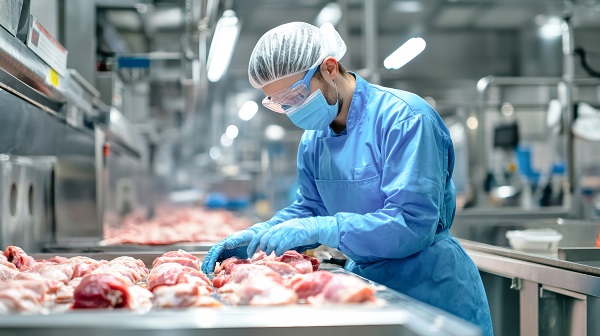
Wear gloves, aprons, safety goggles, hearing protection, respiratory protection, and slip-resistant shoes to protect from cuts, chemicals, and other hazards. Always wear PPE when handling raw poultry to minimize exposure to bacteria like Salmonella. Make sure the PPE fits well and is in good condition. Replace any damaged items immediately.
4 Install, use, and maintain machine guards.
Ensure all processing equipment has proper safety guards on the blades, motor drives, and sprocket wheels to prevent accidents.
5 Establish and follow lockout/tagout (LOTO) procedures.
Ensure machines are completely powered down and any residual energy is safely discharged before cleaning or maintenance. Implement strict LOTO guidelines to prevent unexpected machine activation, including from stored energy sources.
6 Follow safe handling practices for chemicals.
Put strict guidelines in place to control hazards from chemicals, including those used to control bacteria and ensure food safety. This includes proper storage, handling procedures, and emergency response plans. Regular training on chemical safety and the proper use of Safety Data Sheets (SDSs) ensures workers understand the risks and know how to protect themselves.
7 Keep a clean and tidy environment.
Keep floors, drains, and surfaces clean and free of excess meat and fat. Regular cleaning and disinfection reduce the risk of bacterial growth and prevent slip hazards. Put in place a regular schedule for thorough cleaning. Provide proper cleaning equipment and supplies to maintain a hygienic work environment.
8 Address physical and biological hazards proactively.
Regularly inspect and maintain cutting equipment and keep knives sharp to prevent accidents. Install non-slip flooring to prevent falls. Implement strict hand-washing protocols.
By prioritizing these safety measures, employers and employees in the poultry processing industry can work together to create a safer, more productive work environment. For more information on workplace safety or for free, confidential help complying with OSHA regulations, contact a DWC Occupational Safety and Health Consultation (OSHCON) Program professional at 800-252-7031, option 2, or OSHCON@tdi.texas.gov.