

Esta información también está disponible en español.
Hydrogen sulfide (H2S), which naturally occurs in crude oil and natural gas deposits, presents a serious hazard in the oil and gas industry. This colorless, highly toxic gas smells like rotten eggs at low concentrations but can quickly numb your sense of smell, making it difficult to detect. Since H2S is heavier than air, it tends to accumulate in low-lying areas and confined spaces. It’s also highly flammable and can ignite or explode under high temperatures.
H2S exposure can occur during various stages of oil and gas production, including:
- Upstream activities: Drilling, extraction, and well operations.
- Midstream operations: Pipeline maintenance and transportation activities.
- Downstream processes: Refining and petrochemical production.
Recent research suggests that exposure to H2S may lead to long-term, severe health effects ranging from eye irritation to respiratory damage and death. Studies also linked low-level exposure to increased risks of depression, anger, fatigue, tension, confusion, and neurological disorders.
These five safety tips can protect workers from H2S exposure:
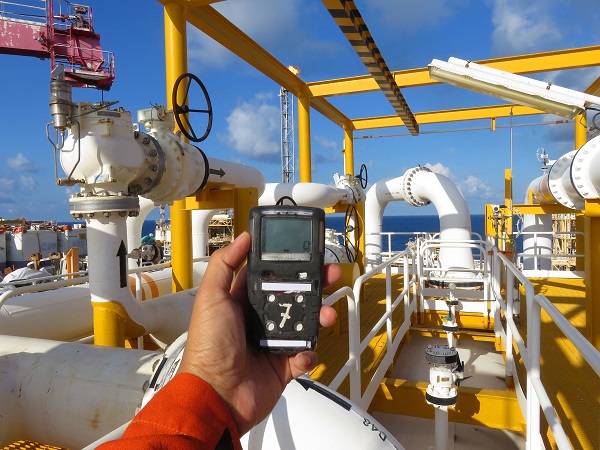
1 Monitor H2S levels continuously.
Use proper gas detection equipment to measure H2S concentrations in the work area. The Occupational Safety and Health Administration (OSHA) mandates that a qualified person must test the air for H2S using appropriate monitoring devices. Ensure all workers wear personal H2S monitors in areas where the gas may be present. Modern gas detection instruments, that workers wear, offer real-time data, improving detection and monitoring capabilities compared to manual inspection or weekly data reports.
2 Implement proper ventilation.
Use exhaust and ventilation systems to reduce H2S levels in confined spaces and work areas. Ensure these systems are non-sparking, grounded, corrosion-resistant, and explosion-proof. Proper ventilation is crucial for minimizing H2S exposure and preventing gas buildup, particularly in sour gas processing operations where H2S risks are high.
3 Use personal protective equipment (PPE).
Workers operating in areas with potential H2S exposure must use the correct PPE. This includes respiratory protection such as:
- Full-face pressure-demand self-contained breathing apparatus (SCBA).
- Combination full-face pressure-demand supplied-air respirator with auxiliary self-contained air supply for concentrations at or above 100 parts per million (ppm).
4 Establish and follow emergency procedures.
Develop and communicate emergency response plans for H2S exposure incidents. These plans should include evacuation procedures, emergency shutdown protocols, and rescue operations. Regularly conduct drills to ensure all workers understand their roles during an H2S emergency.
5 Provide comprehensive H2S safety training.
Ensure all workers receive in-depth training on H2S hazards, safety procedures, and the proper use of PPE and monitoring equipment. OSHA recommends annual refresher training for all employees who may be exposed to hydrogen sulfide gas. H2S is considered a "silent killer" due to its ability to quickly render someone unconscious, so proper training is crucial.
By following these safety tips and fostering a strong safety culture, oil and gas companies can reduce H2S-related injuries, illnesses, and fatalities. For more information on protecting oil and gas workers, contact a DWC Occupational Safety and Health Consultation (OSHCON) Program professional for free, confidential, onsite, or virtual help to identify and eliminate workplace hazards: 800-252-7031, option 2, or OSHCON@tdi.texas.gov.