

Esta información también está disponible en español.
Thousands of construction workers suffer head injuries each year. These injuries often occur when a worker is struck by falling objects or comes into contact with overhead hazards. In 2020, head injuries accounted for nearly 6% of non-fatal occupational injuries involving days away from work, with almost half resulting from contact with objects or equipment.
To help prevent many of these injuries, OSHA has recently recommended a shift away from traditional hard hats to more modern safety helmets. While hard hats have been a staple in the industry since the 1960s, safety helmets provide better protection against a wider range of head injuries. Here's how this change aims to increase worker safety:
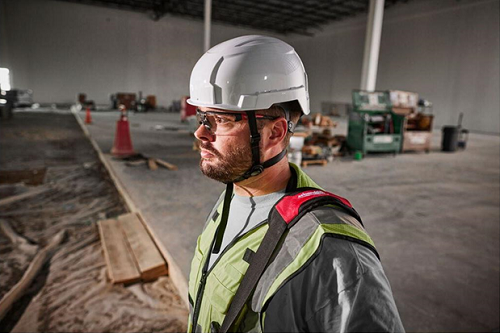
1 Improved safety.
Safety helmets protect the entire head, including the sides, front, and back. Hard hats only protect the top of the head.
2 Secure fit.
Chin straps keep safety helmets in place during falls or sudden movements.
3 More comfort.
Safety helmets are lighter, made of stronger materials, and fit closer to the head. The result is less neck strain during long wear.
4 Works with other gear.
Face shields, goggles, built-in hearing protection, and communication systems work easily with safety helmets.
5 Longer lasting.
Safety helmets can last up to 10 years, while hard hats should be replaced after five years.
6 Spreads impact.
Safety helmets have suspension systems that spread an impact more evenly across the head.
While OSHA strongly recommends the use of safety helmets, this change is not yet mandatory across all workplaces. This allows for a gradual shift to give employers time to assess their needs and make the changes. OSHA also recommends this change for workers in oil and gas industries, high-temperature environments, specialized work, electrical work, and when working at heights.
For more information, review OSHA’s “Head Protection: Safety Helmets in the Workplace,” or contact an Occupational Safety and Health Consultant for free, confidential, onsite or virtual advice at 800-252-7031, option 2, or OSHCON@tdi.texas.gov.