

Nearly one million workers get hurt each year from lifting, reaching, and doing the same motions over and over again. These overexertion injuries — like back strains, muscle pulls, and joint pain — are some of the most common workplace problems. They cost U.S. companies billions of dollars in medical bills and lost work time.
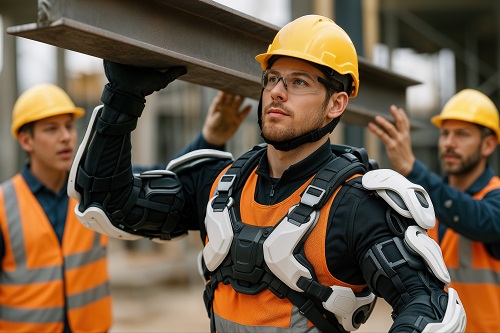
Wearable technology called exoskeletons can help prevent these injuries. Think of an exoskeleton as a lightweight support suit worn over your work clothes. It doesn't do the work for you, but it helps your muscles and joints handle heavy lifting, overhead reaching, and repetitive tasks. These high-tech helpers, available in full-body or partial body designs, are already making work safer in warehouses, construction sites, and factories.
These tips for exoskeletons can help you protect your workforce and prevent injuries and lost productivity:
1 Choose the right type for your job.
Pick an exoskeleton that fits your specific tasks: use full-body or back-support models for heavy lifting, upper-body or shoulder supports for frequent overhead work, and lower-body or leg assists to reduce fatigue during long periods of standing or walking. The right match should target where workers need extra strength or support most.
2 Get proper training before you start.
Learn how to put on, adjust, and safely use your exoskeleton. Make sure your supervisor can spot problems too. Good training prevents accidents and helps the device work better.
3 Make sure it fits well.
A poor fit can make lifting and moving risky. Adjust straps, padding, and support levels for your size and shape — customizing as needed to prevent slipping or pressure points. Check your range of motion to ensure comfort and freedom of movement. Walk around to test the fit and ask for help to make any adjustments.
4 Keep using your regular safety gear.
Exoskeletons work with your normal safety equipment, not instead of it. Continue to wear your gloves, safety shoes, helmet, and other required gear. Follow all workplace safety rules.
5 Take breaks even with extra support.
Don’t work longer just because you have an exoskeleton. Your body still needs regular rest, especially in hot conditions. The device’s metal parts and extra weight can add heat, raising your risk of heat stress or fatigue. Watch for signs of heat-related illness and take breaks as needed. Stick to normal break schedules.
6 Check and care for your equipment daily.
Before each shift, inspect your exoskeleton for broken parts, loose straps, or wear, and report any damage right away. Never use equipment that isn’t safe. Dirt, sweat, and debris can affect performance and cause breakdowns. Follow the manufacturer’s instructions to keep it cleaned and well-maintained for the best performance.
DWC’s safety training specialists are here to help workers stay safe and healthy on the job. To schedule customized job training or a free, on-site occupational consultation to help you comply with OSHA regulations, contact HealthSafety@tdi.texas.gov.