
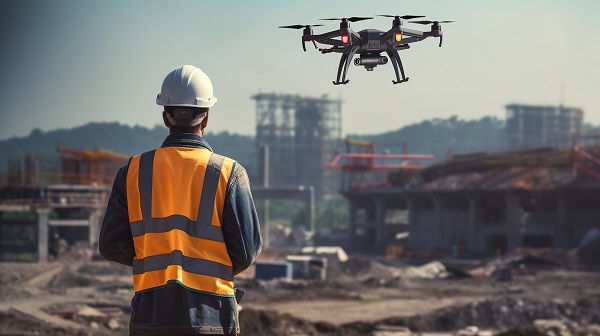
Drone technology is changing construction sites across the country — making them safer, more efficient, and easier to manage. Also called unmanned aerial vehicles, drones give workers and supervisors a clear view of the job site from above without risking a fall, entering a confined space, or climbing unstable structures. By improving how crews detect, monitor, and record hazards, drones help prevent serious injuries and fatal accidents in construction.
Here are some key ways drones make construction work safer and more productive:
1 Identify hazards safely from the air.
Drones quickly scan large or complex job sites and spot dangers such as unstable scaffolding, exposed wiring, or loose materials. With high-resolution images and live video, supervisors can fix hazards before anyone enters the danger zone.
2 Inspect hard-to-reach areas.
Instead of sending workers to climb roofs or enter tight spaces, drones stream video that shows damage, leaks, or cracks. This keeps workers away from fall hazards and other risks while keeping the project on schedule.
3 Use thermal imaging to detect hidden dangers.
Drones with thermal sensors detect electrical hot spots, water leaks, or weak areas in a structure that the eye can’t see. Finding these issues early allows repairs before they cause equipment failure or injuries.
4 Monitor safety in real time.
Ongoing drone patrols give supervisors a full view of site conditions. They can correct unsafe acts or hazards — like missing guardrails or blocked exits — right away. Real-time monitoring also supports OSHA compliance.
5 Improve training and safety awareness.
Drone footage helps workers see real safety successes and mistakes on their own job sites. This visual learning builds awareness and supports better decision-making on the ground.
6 Support emergency response.
During an accident or severe weather, drones can assess damage, locate injured workers, and guide rescuers. This saves critical time and helps crews evacuate safely.
7 Enhance environmental and site compliance.
Drones track erosion, runoff, and other environmental issues to meet local and federal rules. These images also provide documentation for OSHA or other inspections.
8 Strengthen site security.
Routine drone flights help stop theft and vandalism by recording activity in restricted areas. They also capture evidence if an incident occurs, protecting workers and company property.
9 Make sure operators have training and follow FAA rules.
Drone operators must follow Federal Aviation Administration (FAA) rules, including altitude limits and no-fly zones. Make sure operators hold proper certification and complete OSHA-approved safety training to ensure safe and legal drone use.
For more information download DWC’s Drones for Workplace Safety Fact Sheet to share during safety meetings or toolbox talks. For help with OSHA-authorized workplace training or to schedule a free on-site safety and health consultation, call 512-804-4610 or email SafetyTraining@tdi.texas.gov.