
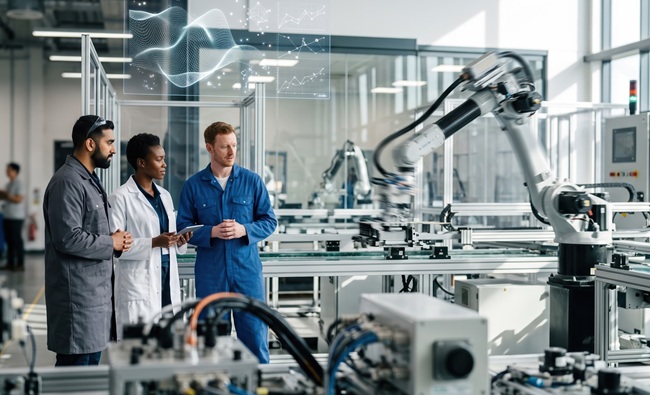
A machine starts vibrating differently. A sensor detects rising heat. A worker reports a close call. In a busy manufacturing plant, getting that information to the right person quickly can help prevent injuries.
Artificial intelligence (AI) can help manufacturers analyze this information. It can identify potential hazards and quickly communicate warnings or other safety information to workers. But AI does not replace a strong safety program — or the people who know the work firsthand. It works best as a tool that helps workers and safety professionals make informed decisions.
Here are seven ways manufacturers can use AI to strengthen safety communications while keeping people in control.
1 Catch hazards in real time.
Sensors on machines and wearable devices track heat, noise, vibration, toxic gases, and other conditions in real time. The system flags a reading the moment it crosses a limit the employer sets. A quick warning can give workers time to move away, shut down equipment, or call for help before someone gets hurt.
2 Send the right message to the right person.
Not every worker needs the same information. AI can send a short, clear warning to workers near a hazard while providing supervisors with a more detailed report. This prevents workers from getting buried in data while giving managers the information they need to investigate and correct the problem.
3 Spot patterns before they lead to injuries.
AI reviews historical incident and near-miss reports to flag patterns a busy safety team might miss, such as a machine that overheats during peak hours or a walkway that gets slick in wet weather. Finding these patterns early allows the plant to repair equipment, improve procedures, or provide training before someone gets hurt.
4 Break down language barriers.
Texas manufacturing plants often bring together workers who speak different languages. AI translation tools can convert a safety alert into a worker’s preferred language within seconds. They can also help develop simple diagrams, audio messages, or short video scripts for workers who may have difficulty reading written instructions.
Always have a qualified person review AI-generated translations. A mistranslated warning could confuse workers or put them in danger. OSHA requires employers to provide safety training in a language and vocabulary workers understand.
5 Centralize hazard reporting.
AI-powered platforms can keep hazard reports from getting lost in emails, sticky notes, or hallway conversations. A worker can report a hazard from a phone or tablet, and the system can send it to the appropriate department, track the response, and flag repeated problems. While AI can help organize and route reports, employers remain responsible for reviewing each one, responding promptly, and making sure hazards are corrected.
6 Target training to actual needs.
Incident and near-miss information can reveal gaps in training, procedures, or communications that general or annual training misses. Safety professionals can use those findings to provide focused instruction instead. They should review the AI’s conclusions before assigning training because an incident may have several contributing factors.
7 Keep people in charge.
A possible hazard flagged by AI still needs a trained eye. It cannot replace the judgment of workers, supervisors, and trained safety professionals. Treat an AI alert as information to investigate, not as the final answer.
Verify hazards and recommendations before acting on them. Continue scheduled inspections, job safety analyses, maintenance, and supervisor walkthroughs even when an AI dashboard shows no problems. AI does not change an employer’s responsibility to identify and control workplace hazards.
For more information on ways to improve workplace safety, contact a DWC OSHA-authorized safety training specialist at 800-252-7031, option 2, or visit www.txsafetyatwork.com for free safety training publications, videos, and webinars.