
-
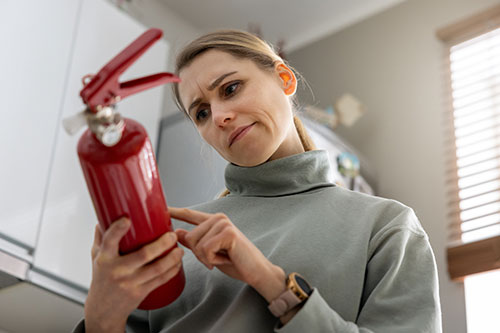
Choose the right fire extinguisher.
Different fires need different extinguishing agents.
- Class A: For materials like paper and wood.
- Class B: For flammable liquids like gas and oil.
- Class C: For electrical equipment.
- Class D: For metals.
- Class K: For oils and fats used in cooking.
Most home extinguishers are a combo of Class A, B, and C. They can put out most small fires.
-
Only use extinguishers on small fires.
Think the size of a small trashcan. Make sure it’s contained and not growing. If you have any doubt, call your fire department.
-
Learn to PASS.
PASS is an easy way to remember how to use a fire extinguisher:
- Pull the pin.
- Aim low at the base of the fire.
- Squeeze the lever slowly.
- Sweep the nozzle from side to side.
-
Adults – not kids – should use extinguishers.
When teaching kids about fire safety, tell them that the extinguisher is not a toy. They should get an adult for help.
-
Check your extinguisher monthly and service yearly.
Each month, make sure your extinguisher is fully charged, isn’t damaged, and doesn’t have a blocked nozzle. Each year, have your extinguisher serviced by an SFMO-licensed portable fire extinguisher company.
-
Dispose of your extinguisher safely.
Discharge any material in the extinguisher away from structures and people. Take empty fire extinguishers to a fire station or home improvement store.
Resources
- Fire extinguisher information – NFPA
- Choosing and Using Fire Extinguishers – U.S. Fire Administration